

Blended families are one of the most common family structures in Canada, and the Fraser Valley is no exception. When one or both partners bring children from previous relationships into a new household, daily life can feel seamless — shared meals, school runs, holidays together. But when it comes to estate planning, the law doesn’t always see your family the way you do.
In British Columbia, the legal framework for inheritance was designed with traditional family structures in mind. If you don’t take deliberate steps to plan your estate, the default rules can produce outcomes that contradict your intentions entirely — leaving stepchildren with nothing, creating conflict between your spouse and your biological children, or forcing the sale of the family home at the worst possible time.
Why Blended Families Face Unique Estate Planning Challenges
The central tension in blended-family estate planning comes down to this: you likely want to provide for your current spouse while ensuring your children from a previous relationship are taken care of. These two goals can conflict if your estate isn’t carefully structured.
Without a will, BC’s Wills, Estates and Succession Act (WESA) distributes your assets according to a rigid formula that recognizes only legal and biological relationships. It doesn’t recognize the stepparent who coached your kids’ soccer team for a decade, or the stepchild you helped put through college. The law sees biological connections and legal adoption — nothing else.
This means that if you die without a will, your stepchildren receive nothing. Your biological children from a previous relationship may receive less than you intended. And your surviving spouse may receive more or less than you envisioned, depending on how the formula plays out against your actual assets.
How BC's Default Rules Affect Blended Families
Understanding what happens without a will is the starting point for understanding why deliberate planning matters so much.
The Spousal Preferential Share
Under WESA, when someone dies intestate (without a will) and leaves both a spouse and children, the spouse receives a preferential share before anything else is divided. The amount of that share depends on whether the children are also the children of the surviving spouse.
If all the children are from the current relationship, the preferential share is $300,000. But if any of the children are from a different relationship — which is the defining characteristic of a blended family — that share drops to $150,000.
After the preferential share and household furnishings, the remaining estate is split 50/50 between the spouse and the children.
Stepchildren Are Excluded Entirely
This is the single most important point for blended families to understand: under WESA’s intestacy rules, stepchildren have absolutely no right to inherit from a stepparent’s estate. Only biological children and legally adopted children qualify as “descendants.”
It doesn’t matter if you raised your stepchild from the age of two. It doesn’t matter if they call you Mom or Dad. Without a will that names them specifically, they receive nothing.
Furthermore, stepchildren in BC cannot challenge a stepparent’s will through a will variation claim. Only spouses and biological or legally adopted children have the legal standing to contest a will under WESA. This means that even if a stepchild believes they were unfairly excluded, they have very limited legal recourse.
The only way to ensure your stepchildren inherit from you is to explicitly name them in your will.
The Risks That Come After the First Spouse Dies
Many blended families use what are sometimes called “mirror wills” — each spouse writes a will leaving everything to the other, with the understanding that the surviving spouse will eventually pass the assets along to all the children equally.
This approach is built entirely on trust, and it carries significant risk. In BC, the general rule is that a person can revoke or change their will at any time. There is nothing legally preventing the surviving spouse from writing a new will after the first spouse dies — one that leaves everything to their own biological children and nothing to the deceased spouse’s children.
Even if the surviving spouse acts in good faith, life circumstances change. They might remarry, and a new spouse could inherit the estate. They might deplete the assets during their lifetime. Or they might simply update their will to reflect their new priorities, without intending to harm anyone.
The result is the same: the first spouse’s children lose out, despite what both partners originally agreed.
This isn’t a hypothetical concern. It’s one of the most common sources of estate disputes in blended families across British Columbia.
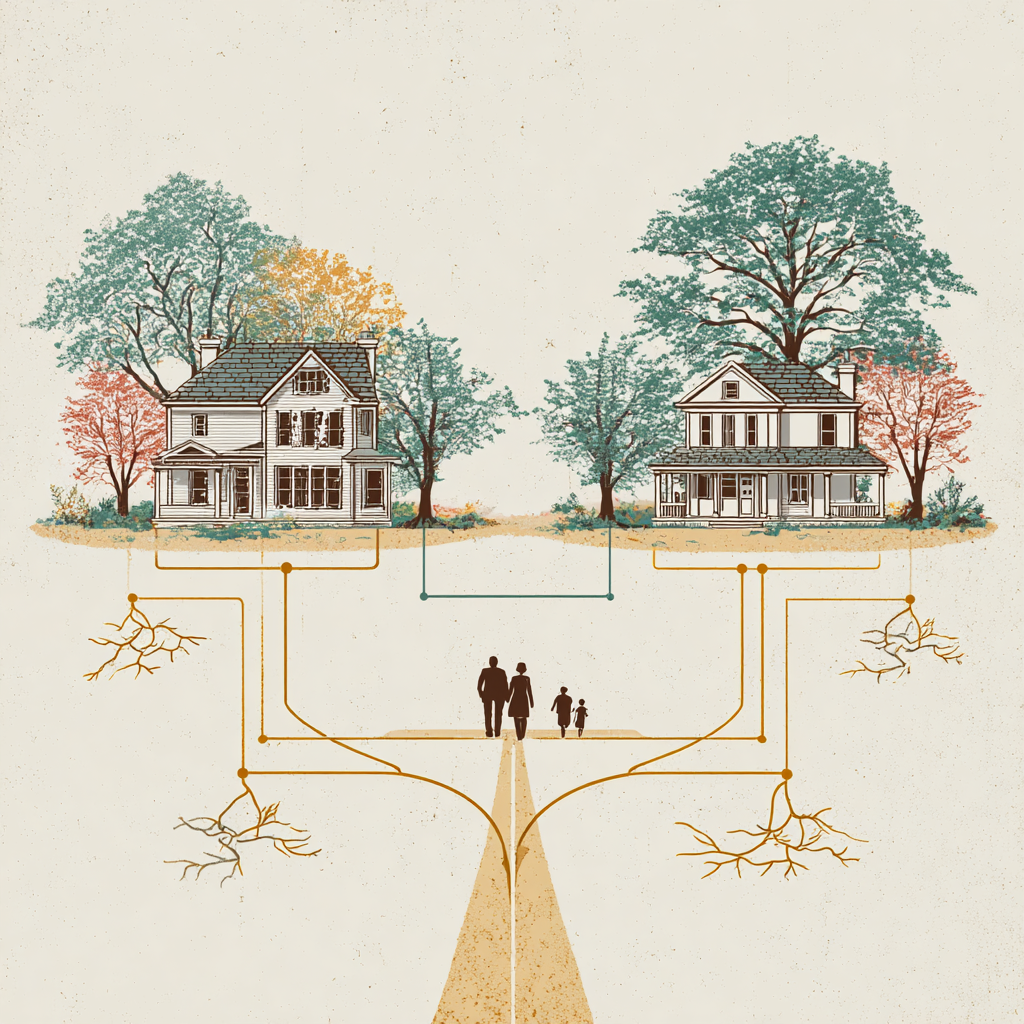
Estate Planning Tools for Blended Families
Fortunately, there are legal tools available to address these challenges. The right combination depends on your specific family structure, assets, and goals.
A Carefully Drafted Will
The foundation of any estate plan is a valid will, but for blended families, the will needs to be especially precise. Vague language or assumptions can lead to unintended outcomes.
Your will should clearly identify each beneficiary — including stepchildren if you wish to provide for them. It should specify what each person receives and under what conditions. And it should account for the possibility that circumstances will change, including the potential remarriage of the surviving spouse.
For blended families, it’s often advisable for each partner to prepare their own will with independent legal advice. This ensures that both partners understand the implications of their choices and that neither feels pressured to agree to terms they’re uncomfortable with.
Spousal Trusts
A spousal trust is one of the most effective tools for blended families because it allows you to provide for your spouse during their lifetime while preserving assets for your children after the spouse passes away.
Here’s how it works: instead of leaving assets outright to your spouse, your will directs that some or all of your estate be held in trust. The surviving spouse receives income from the trust (and sometimes access to capital for specific needs), but the underlying assets remain protected. When the surviving spouse eventually passes away, the remaining trust assets are distributed to the beneficiaries you named — typically your children from a previous relationship.
The key advantage is that the surviving spouse cannot redirect these assets. They benefit from the trust during their lifetime, but the ultimate distribution is locked in by the terms you set.
Beneficiary Designations on Registered Accounts
RRSPs, TFSAs, RRIFs, and pension plans all allow you to designate specific beneficiaries. These designations override your will — the funds go directly to the person you named, regardless of what your will says.
For blended families, this is both an opportunity and a risk. The opportunity is that you can direct specific financial accounts to specific people with certainty. The risk is that outdated beneficiary designations — left over from a previous marriage, for example — can accidentally send funds to someone you no longer intended to benefit.
Mutual Wills Agreements
Some blended family couples consider a mutual will agreement — a legally binding contract where both partners agree not to change their wills after the first spouse dies. The idea is to prevent the surviving spouse from redirecting the estate away from the deceased’s children.
While a mutual will agreement is enforceable in principle, it has practical limitations. Courts have sometimes found ways around them, and they can create complications if the surviving spouse’s circumstances change in ways that genuinely require a different estate plan. Many estate professionals view them as a backup measure rather than a primary strategy, recommending spousal trusts as a more reliable alternative.
Powers of Attorney and Representation Agreements in Blended Families
Estate planning isn’t only about what happens after death. Incapacity planning — making sure someone you trust can manage your finances and health care decisions if you become unable to do so — is equally important for blended families.
An Enduring Power of Attorney allows you to name someone to handle your financial affairs if you become incapacitated. A Representation Agreement allows you to name someone to make health care and personal care decisions on your behalf.
If you appoint your spouse as your attorney under a Power of Attorney, they will have broad authority over your financial assets. In a blended family, this means they could potentially make decisions that affect what your children from a previous relationship ultimately inherit. Open conversations and clear documentation of your intentions can help prevent misunderstandings.
⚠️ Risk Factor
The risk is that outdated beneficiary designations — left over from a previous marriage, for example — can accidentally send funds to someone you no longer intended to benefit.
When to Review Your Estate Plan
Blended families should review their estate plan more frequently than traditional families because their circumstances tend to be more dynamic. At a minimum, review your documents when any of the following occur: a marriage or separation in the family, the birth or adoption of a new child, a significant change in the value of your assets (such as buying or selling property), a child reaching adulthood, or a change in your relationship with any beneficiary or appointed person.
Even without a triggering event, reviewing your plan every two to three years ensures it continues to reflect your current family dynamics and wishes.
Taking Action
If you’re in a blended family and you don’t yet have an estate plan — or if your current plan doesn’t specifically address the complexities of your family structure — the most important step you can take is to start the conversation with a legal professional who understands these issues.
A notary public can help you draft a will that names your beneficiaries clearly, structure your assets to balance competing interests, prepare Powers of Attorney and Representation Agreements that reflect your blended family dynamics, and review beneficiary designations on your existing financial accounts.
The goal isn’t perfection — it’s clarity. A plan that clearly expresses your intentions, even if circumstances change, gives your family something the law’s default rules never can: your voice in the decisions that matter most.
Frequently Asked Questions
Do stepchildren automatically inherit in BC?
No. Under WESA’s intestacy rules, only biological and legally adopted children are recognized as descendants. Stepchildren must be explicitly named in a will to receive any inheritance from a stepparent.
Can a stepchild contest a will in BC?
No. Only spouses and biological or legally adopted children have the legal standing to bring a will variation claim under WESA. However, a will can still be challenged on other grounds, such as lack of capacity or undue influence.
What happens if my spouse changes their will after I die?
In BC, any person can revoke or change their will at any time. If you leave your entire estate to your spouse outright, there is nothing preventing them from writing a new will that excludes your children. A spousal trust is the most reliable way to prevent this outcome.
Should both spouses in a blended family use the same notary?
It depends on the complexity of your situation. For straightforward plans where both partners’ interests are aligned, a joint consultation is often practical. However, if there are significant competing interests — such as disagreements about how to divide assets between biological and stepchildren — independent legal advice for each partner may be more appropriate.
What is the difference between a spousal trust and leaving assets outright?
When you leave assets outright, your spouse has full ownership and can do whatever they wish with them — including leaving them to someone other than your children. A spousal trust provides your spouse with income and potentially some access to capital, but the underlying assets are preserved and distributed according to the terms you set when the surviving spouse passes away.
