
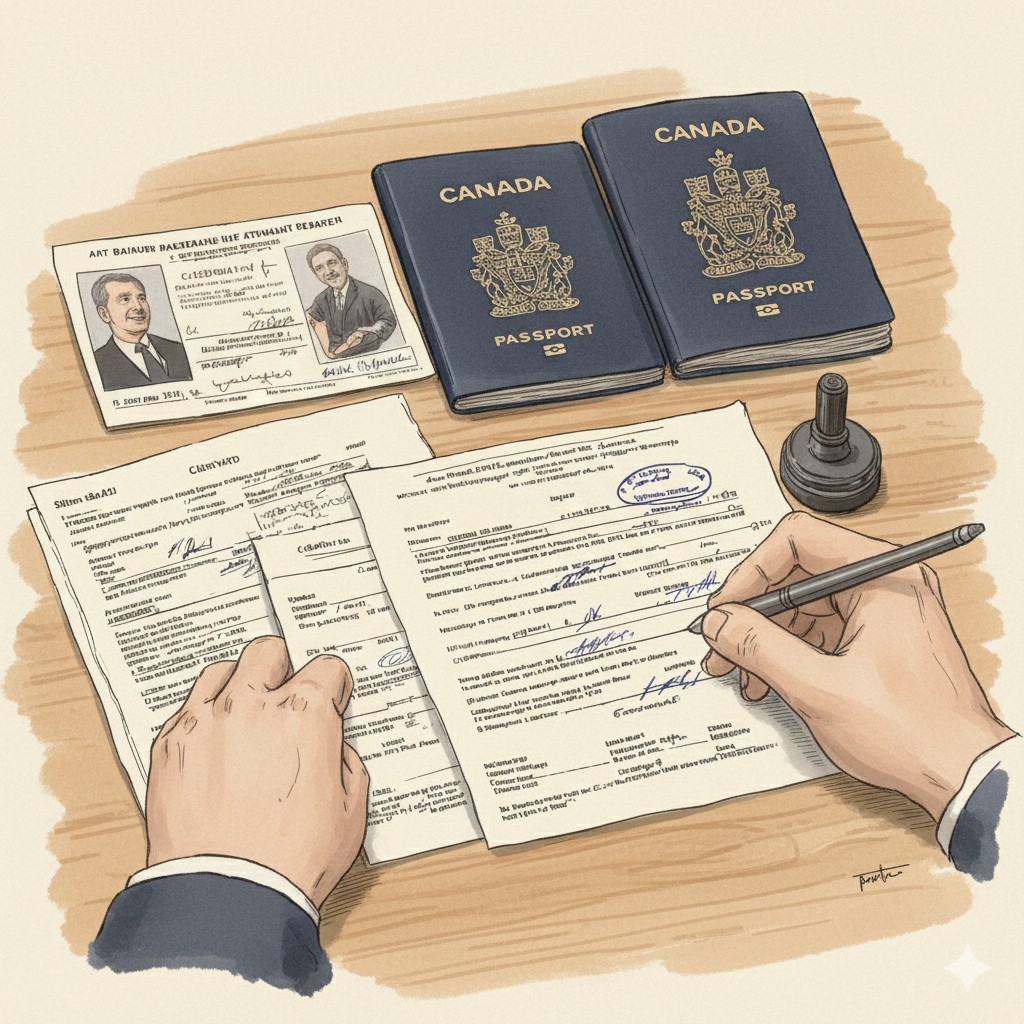
Losing important documents, such as a passport, driver’s license, or ID, can be stressful — especially when replacements require official proof of loss. In British Columbia, one of the most common ways to confirm the loss or theft of documents is through a statutory declaration notarized by a notary public.
This document acts as your formal statement of the loss and is often a required step before agencies will issue a replacement. Preparing it correctly from the start helps avoid unnecessary back-and-forth or delays.
Understanding what a statutory declaration is, when it’s needed, and how to properly prepare one can help simplify the process and reduce delays.
What Is a Statutory Declaration?
A statutory declaration is a legal document that functions like a sworn statement. It’s used to declare something to be true to the best of your knowledge — often when no other official proof exists.. It holds the same legal weight as giving evidence under oath in court and must be made voluntarily.
In the case of a lost or stolen document, the declaration serves as a written explanation of what happened, when, and where. Once it’s signed and notarized, it becomes an official document that many government agencies and institutions accept as valid support for reissuing or replacing lost items.
When Do You Need a Statutory Declaration for Lost Documents?
Statutory declarations are often required when other forms of proof, such as receipts, police reports, or original documents, are not available. These declarations provide a formal, legally recognized account of the loss, helping organizations verify the situation before issuing replacements or approvals.
They are particularly useful in situations where the document is needed urgently (such as for upcoming travel or immigration deadlines) and the standard processing steps must be accelerated. In some cases, the declaration may also serve to limit potential misuse of the original document if it was stolen.
You may be asked to provide a statutory declaration when applying to replace items such as:
- Passports (Canadian or foreign)
- Permanent Resident cards
- Driver’s licences or BC Services Cards
- Canadian Citizenship Certificates
- Birth certificates
- Travel visas or permits
- Academic diplomas or transcripts
- Legal or financial records
Each organization may have slightly different requirements, but generally, you’ll need to confirm that the document was lost or stolen and outline the circumstances.
Tip: Always check the specific instructions from the agency you’re dealing with. Some may provide a template for the statutory declaration, while others leave it up to you and the notary.
What Should Be Included in the Declaration?
A statutory declaration for a lost or stolen document should be clear, concise, and factually accurate. It typically begins with your full legal name and current residential address, establishing the identity of the person making the statement. Next, it should identify the type of document that has been lost or stolen — whether it’s a passport, driver’s licence, birth certificate, or other official record.
The declaration should include the approximate date and location where the loss or theft occurred, along with a brief explanation of how the event occurred. For example, whether it was misplaced during travel, stolen from a bag, or accidentally destroyed. This narrative helps provide context, allowing the receiving institution to assess the situation appropriately.
Finally, the statement must affirm that all the information provided is accurate to the best of your knowledge. This element gives the declaration its legal weight. The document must be signed in front of a notary public, who will verify your identity and witness the signing to ensure it meets legal standards.
Step-by-Step: How to Get a Statutory Declaration Notarized in BC
Obtaining a statutory declaration notarized is a relatively straightforward process; however, it’s essential to follow each step carefully to ensure the declaration is both legally valid and accepted by the agency requesting it. Here’s what to expect at each stage, from preparation to submission:
Gather Your Information
Make a note of the type of document you’ve lost, the approximate date it went missing, and any details about how it happened. Whether it was misplaced, stolen, or damaged, having a clear and honest explanation helps ensure the declaration is complete and credible.
Bring a Valid Government-Issued ID
The notary will need to confirm your identity before witnessing your declaration. Bring at least one valid piece of government-issued photo identification, such as a driver’s licence, passport, or BC Services Card. Without a valid ID, the notary cannot proceed.
Book an Appointment with a Notary
Contact a notary’s office to schedule an appointment. While some locations accept walk-ins, many prefer scheduled visits to ensure adequate time for document review and client service. Be prepared to describe the nature of your declaration when booking.
Attend the Appointment
Bring your prepared statement and identification to the appointment. The notary will go over the document with you, check for completeness and accuracy, and confirm that you understand and agree to its contents. You’ll then sign the declaration in their presence.
Submit the Declaration
Once notarized, the declaration becomes a legally binding document. Submit it to the institution or agency requesting it, either in person, by mail, or through an online portal if accepted. Always retain a copy for your own records.
What Happens If You Find the Lost Document Later?
If you find the document after submitting a statutory declaration and receiving a replacement, you may be required to return the original or notify the issuing authority. For example, Canadian passports reported as lost are automatically cancelled and can no longer be used for travel — even if they are later recovered.
In the case of documents like a driver’s licence or BC Services Card, using the original after it’s been declared lost may cause confusion or legal issues, especially if a replacement has already been issued. Attempting to use both versions of the document could be considered misuse or even fraud in certain circumstances.
Some agencies may request that the recovered document be physically surrendered or destroyed, while others may simply ask for written confirmation that it has been located. It’s always best to check with the appropriate authority before taking any action.
When in doubt, contact the organization that issued the document to confirm next steps and ensure you’re complying with any relevant rules or reporting requirements.
What to Do If You Don’t Know How to Draft the Declaration
Writing a statutory declaration can feel daunting if you’re unsure how to structure it or what information to include. In many cases, the organization requesting the declaration may offer a sample or provide specific instructions. Reviewing these before your notary appointment can help ensure your statement meets the necessary requirements.
If no guidance is provided, notaries are often able to assist by reviewing your draft or helping you prepare one from scratch. This ensures your declaration includes all legally relevant details and avoids omissions that could delay your application. Preparing with the notary’s input can provide added peace of mind, particularly for declarations involving time-sensitive or complex situations.
Conclusion
Replacing a lost or stolen document can be a stressful process, but a well-prepared statutory declaration helps streamline that process by providing the clear, formal confirmation many agencies require.
By understanding what’s expected and working with a qualified notary, you can ensure your declaration is accurate, complete, and legally valid. Whether the loss involves a passport, ID, or vital record, being proactive and informed makes the situation easier to manage.
FAQ's
Fees vary, but expect to pay between $40 and $60 for a standard declaration. Prices may vary by region and by notary office.
Yes, you can draft your own statement. Many notaries will review it for clarity and completeness during your appointment.
Currently, most declarations require in-person witnessing. Some exceptions exist for remote notarization, depending on the type of document.
If you’re the legal guardian or parent, you can make a statutory declaration on their behalf. Be sure to bring proof of guardianship.
Not always, but it helps. Some agencies may request a police file number as part of the replacement process.
